
High-altitude vineyards
Terraces, manual labour and high altitudes provide the perfect soil on which to root traditional cultivation. Ancient and precious vineyards, kissed by the light and mountain wind that provide unexpected toasts.


Mountain viticulture or, as it is often called, heroic viticulture is characterised by the cultivation of vines in inaccessible, difficult-to-work areas at high altitudes. Italy, due to its geographical conformation, offers a vast panorama for this type of cultivation, with the Alpine arc framing it and the Apennine chain crossing its ridge.
Surrounded by breathtaking landscapes, the grapes develop very different characteristics from those of the cultivated plains. Mountain wines are in fact known for their intensity, speaking of reds, and for their purity in white wines. Cultivated in locations with a high temperature range between day and night, at altitudes exposed to the sun, mountain vineyards require a great deal of effort, during cultivation and harvesting.
Here in Italy, mountain wines are classified according to the Cervim – Centro di Ricerca, Studi, Salvaguardia, Coordinamento e Valorizzazione per la Viticoltura Montana (Centre for Research, Studies, Safeguarding, Coordination and Valorisation of Mountain Viticulture) – which has defined their common features:
- Cultivation at altitudes above 500 m a.s.l. (excluding plateaus);
- Slopes greater than 30%;
- Cultivation on terraces and/or steps;
- Complex cultivation conditions.
Of course, not all regions can enjoy areas with these characteristics, but for a small peninsula like ours, the area planted with vines at high altitudes is not so scarce. From the peaks of Piedmont to the slopes of Mount Etna, passing through Trentino-Alto Adige, Valtellina or the Cinque Terre, some areas of Abruzzo or Calabria, there are many territories that are home to this viticulture.
A common feature of all these mountain areas is an artisanal profile and strong roots in the history of the territory. In fact, we tell you of grape cultivation and wine production that are strongly linked to the ancient and traditional agricultural economy. It is tiring work, requiring time, energy and the direct commitment of man, which cannot be replaced by mechanisation. Terracing defines and tidies up the steep mountain slopes, is a clear sign of human settlement in the Alpine valleys, and has very high maintenance costs. For these reasons, cultivation in the mountains was progressively abandoned in the past, especially with the introduction of vineyards in the lower hills or on the plains, facilitated by mechanised harvesting.
The abandonment of ancient rural and agricultural traditions, however, has come to a halt in recent years. The rediscovery of traditional manual skills, the desire to preserve native vines and historical cultivations is preserving an invaluable oenological and cultural heritage.
Steep slopes or terraces with dry stone walls offer ideal conditions for healthy plants and roots that are not afraid of moisture. The mountains, with their ‘poor’ soils characterised by rocks, gravel and sand, represent a valuable substrate for production. Added to this are the cool climate, sunny exposures and constant wind exposure, factors that contribute to naturally healthy grapes in vineyards that require less treatment. This is why mountain wines are very often produced organically, thanks to the continental climate characteristics that hinder the proliferation of bacteria and diseases.
We do not want to forget that many vineyards are made up of pre-phylloxera grapes, which means they are ancient and of rare strength and health. Just for a quick review: phylloxera is a pest that spread across Europe from the second half of the 19th century. The action it had was of such magnitude that it was considered a real scourge, unlike the terrible biblical locusts! As a result, there was a need to completely rebuild our continent’s viticultural heritage, which was then clearly divided into prephylloxera and postphylloxera.
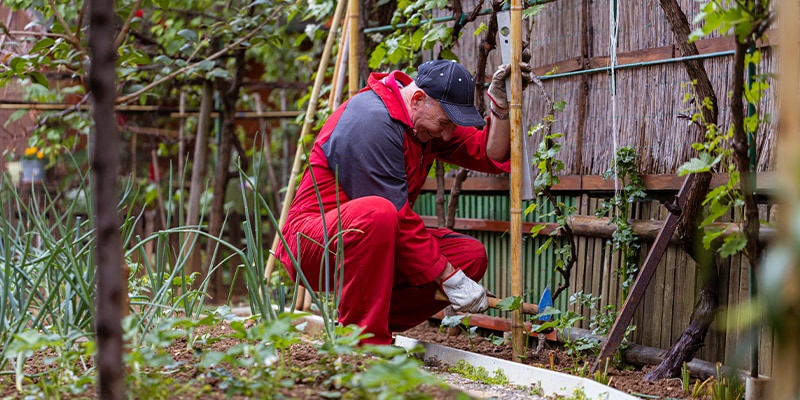 The altitude clearly leads to a progressive lowering of temperatures, which results in a slower and often late ripening of the grapes. The cooler climate influences two other parameters: it increases the total degree of acidity and decreases sugar production.
There will be no shortage of astute farmers who will tell you that even bringing the harvest time forward can achieve similar results, but you will understand very well that it is quite different to produce wines with grapes harvested prematurely to maintain a high acidity and, on the other hand, to produce them with ripe grapes, which naturally retain a high basic acidity, thanks to the uniqueness of the terroir. Full ripeness of the grapes guarantees better aromas. It is the action of light, rather than heat, that determines the ripening of the fruit: the exposure of the vines on a steep slope guarantees, even at low temperatures, perfect irradiation of the bunches which contain the sugar content.
A ROOM WITH VIEW
Winking at Forster’s novel, we tell you about the marvellous view you can enjoy from an open-air room, a vineyard in the middle of the mountains: a wine cellar that overlooks the Alpine slopes or a tasting room that enjoys the Apennine sun are a gift you should treat yourself to from time to time.
Add to this richness for the eyes, the possibility of tasting wine productions that are out of the international canons, true niche products: the terraces and slopes are perfect for native vines, which give their best in these conditions.
This bond with the territory characterises the Villa Walter Fontana winery whose commitment remains that indicated by the founder: ‘to promote a unique territory by safeguarding its peculiarities and bringing it ever closer to the consumers of the future’. In Valtellina, the winery has dedicated itself for years with passion to the production of wine made ‘as it used to be’: in the vineyard, harvesting by hand and with respect for the grapes and their unique terroir. Attention to the natural component therefore becomes central in the winery, a true guide to production that is as sustainable and environmentally friendly as possible.
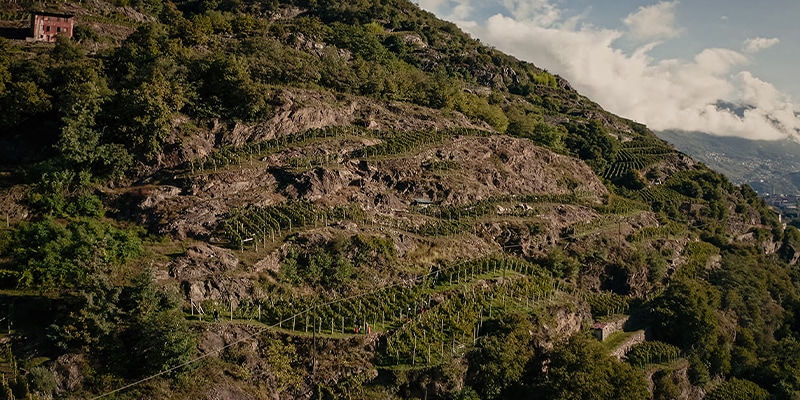
The complex orographic conditions create quite a few impediments to mechanisation: this requires the land to be cultivated almost exclusively by hand or even resorting to the use of helicopters during the grape harvest. The permanent state of severe isolation, however, has not prevented Valtellina from becoming the most important mountain wine-growing area in Italy. Here, Villa Walter Fontana brings prestige to the grape variety that most characterises the area, Nebbiolo (or rather, Chiavennasca), alongside the cultivation of local varieties such as Pignola and Rossola.
Working these grapes, in these lands, implies a commitment made possible only by extreme passion, with a workload far greater than that required to cultivate vines on the plains, but which allows us to bottle the fruit of the indissoluble union between the power of nature and the strength of human dedication.
STORIES OF VINEYARDS AND SLOPES, IN BOTTLES
When a group of passionate winegrowers decide to join forces to start a story of excellence, a project like that of Cantina Toblino is born, which since 1960 has represented the link between social cooperation, people and territory. In a valley where the rows of vines almost merge with the blue of the lakes, the grapes have been wresting land from the mountains for centuries. Imperfection is the stylistic feature that characterises these cultivations, the aesthetics are the result of the hand of the winegrower who has adapted to the geometry of the mountain slopes.
In this valley, the wines stand out proudly as they tell the story of the land where they are born. Cantina Toblino was founded precisely to make the most of the grapes conferred by the winegrowers of the Valle dei Laghi: today, the Toblino farm cultivates a few hectares of the old bishop’s canteen organically, but on the other hand, the Winery maintains its original identity, receiving grapes from more than 600 winegrower-members. It is with justifiable pride that they speak of the 40 hectares cultivated by the farm, because it is the largest organic plot in the region, covering almost 10% of the organic area of the province of Trento.
Over the course of time, Cantina Toblino has become a true benchmark for viticulture in the Valle dei Laghi: they speak of their vineyards as an ‘open-air laboratory’, a space for viticultural and oenological research and innovation.
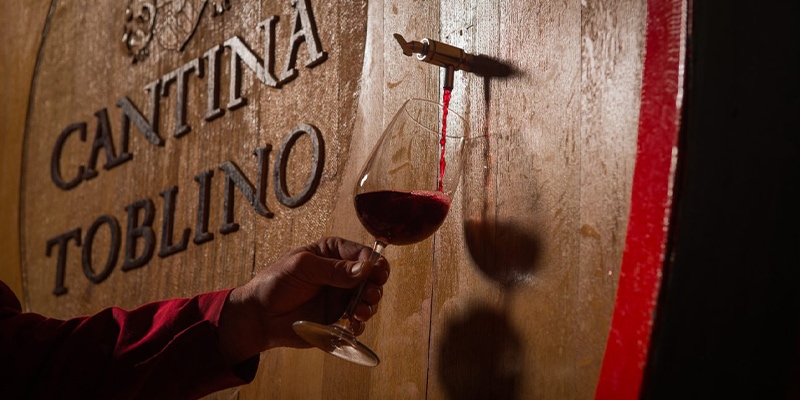
Thanks to the Hosteria, it is also possible to breathe in and taste the fruit of their vine cult: you will find traditional local specialities paired with grappa and wines from the cellar. Theirs is a project born of passion, in the vineyard and in the cellar, and which takes shape in the unforgettable tasting.
Despite all the obvious difficulties, mountain viticulture represents an inestimable value: it protects the agricultural tradition of the territories, the beauty of the landscapes and gives wines of extraordinary quality: aromatic, mineral and with a vibrant freshness.
To dare with a tasting that will not disappoint, we propose ‘a journey of altitudes’: open bottles from valley vineyards alongside wines born in favour of the sea and you will discover the goodness of terroir in all its nuances.
Ready to join the Vinhood family?


Vinhood is the First Italian Taste Agency. We explore the world of taste to guide people about how to choose and consume products and supporting companies in nurturing personalized relationships with their customers.