
10 teas to try at least once in your lifetime – Part 1
A few suggestions for travelling the world through a cup of tea, sparking your imagination, spicing up your life by trying new flavors, expanding your sensory horizons, and discovering the 10 best crus which everyone must taste at least once in their lifetime.

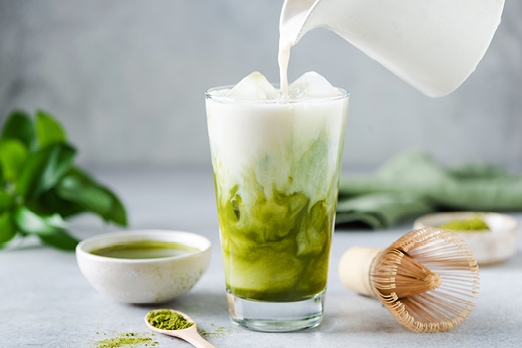
A few suggestions for travelling the world through a cup of tea, sparking your imagination, spicing up your life by trying new flavors, expanding your sensory horizons, and discovering the 10 best cru which everyone must taste at least once in their lifetime. At the end, so that we don’t forget that tea is a ritual which is meant to be enjoyed, we’ll taste it paired with foods, so that this extraordinary beverage may delight and surprise us, not only in the cup.
1) BAI HAO YIN ZHEN
Bai Hao Yin Zhen, also known as “silver needle”, is a white tea produced in the Chinese province of Fujian. This is the finest among the white teas and is produced only with buds that haven’t yet opened.
The best harvests, always carried out entirely by hand, are from the mountain plantations of Tai Lao, located in the county of Fuding (the original production area of Yin Zhen white tea). This area is characterized by the typical sub-tropical climate: mild with a high level of humidity year round and abundant rainfall. The perfect weather conditions allow for the growth of this wonder of nature, which produces a slightly floral, crystalline, velvety infusion with notes of honey.
The Bai Hao Yin Zhen has always been considered a one of a kind tea. Historically, a part of the harvest was set aside as a tribute to the emperor and, to this day, it’s considered one of the finest and most expensive teas. The care with which the buds are selected and the delicacy of its aroma make it a tea for true connoisseurs. With the finest Bai Hao Yin Zhen, white tea achieves perfection. Only a refined and expert palate can fully appreciate its subtle taste and soft texture. It’s a meditative tea, to enjoy by itself, without the accompaniment of food.
2) LONG JING
This is the most famous Chinese tea. It boasts more than one thousand years of history and was mentioned in the first book on tea, the famous The Classic of Tea by Lu Yu, dating back to the Tang dynasty. The original and finest Long Jing, known as Xi Hu Long Jing, comes from the hilly area which stretches out around Lake West, in Zhejiang. This is a typical agricultural product, protected by Chinese national laws. To earn the PGI seal, the entire production process, from cultivation to packaging, must take place in the area of origin. The characteristic aroma of boiled chestnuts and the flat and straight appearance of the leaves, make it unmistakable.
With a light/medium body, it pairs well with: vegetable soups, lightly salted foods, rice, grilled fish, shellfish, flavorful cheeses (brie and camembert), spiced white meats, and fruit.
3) MATCHA
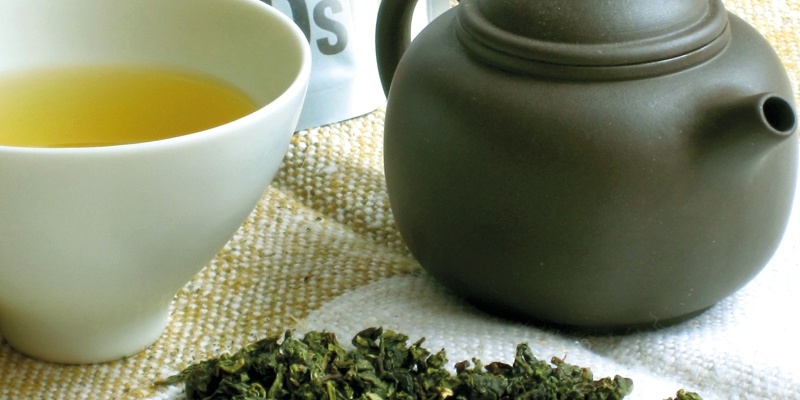
Matcha is the Japanese green tea that’s used during the traditional Cha No Yu ceremony. The best Matcha teas are produced in the Uje and Nishio areas (in the Aichi prefecture). These teas are obtained from leaves that are much greener and richer in nutrients than those from other areas in the country. Matcha is the only tea that’s prepared from leaves that are finely ground until they acquire the consistency of talcum powder. Rather than getting steeped, like all other teas, Matcha is dissolved in. hot water with the use of a chasen, a bamboo whisk. It has significantly superior antioxidant and energizing properties as compared to other green teas.
The best ceremonial grade Matcha teas are an extremely fine, bright, light emerald green powder, as impalpable as flour, with the fresh and subtle fragrance of freshly cut grass. After having dissolved it, the famous “jade froth” forms, offering a unique tactile sensation as one drinks. The finest Matcha teas are a darker and less brilliant green and are used widely in food preparation, especially in pastries.
To prepare it you must put approximately 2 grams of tea (the tip of a spoon or an abundant amount contained on the bamboo spatula, the chashaku) in a bowl. Then pour water at approximately 80°C over it and mix it vigorously with the chasen until you obtain a dense foam.
Matcha is truly a wild card, which can be paired with various ingredients in both sweet and savory recipes. It goes well with caviar, oysters, white chocolate, fine pastries, egg creams, and mascarpone. It’s also excellent in smoothies with soy milk and pulverized on soft cheeses.
4) SENCHA
Sencha is the most famous Japanese tea and accounts for almost 80% of the national production. It has a characteristic fresh fragrance, which is obtained through a unique processing method that includes steaming. The first harvest, in the month of April, is considered the best and is called Shincha, or “new tea”.
Numerous outstanding Senchas come from the Shizuoka and Kagoshima prefectures. These are very refreshing teas, excellent for sipping on early summer days. They can be recognized thanks to their needle-like leaves and their fresh scent of grass and steamed spinach, with a hint of sea air.
Due to their sweet and umami taste and their palate-cleansing freshness, they pair well with fish, mollusks, shellfish, rice, raw and cooked vegetables, fresh delicate cheeses, light legume soups, and Japanese sweets made with azuki beans.
5) DARJEELING GOPALDHARA – FF
In the foothills of the Himalayas, specifically in the Mirik Valley at an altitude of between 1700 and 2200 meters, we find the gardens of Gopaldhara.
This is the highest tea plantation in Darjeeling and the second highest in the world. Because of the harsher climate at this high altitude, the harvest takes place 4-5 weeks later than others. The cold affects the flavor, which is more delicate and complex than teas harvested in gardens located at lower altitudes. The spring harvest, known as First Flush, is inebriating with is floral bouquet followed by notes of citrus, almond, and vanilla. It’s a very popular classic tea.
Due to their tannic notes, Darjeelings are perfect as an accompaniment to continental breakfasts, carbohydrates, and fresh fruit. Their pleasant and invigorating flavor cuts through the fatty texture of grilled fish, salmon, cheeses (like brie, mozzarella, and camembert), lamb, and eggs.

ARE WE DONE?
I realize that I promised you 10 crus, but to avoid overwhelming you, and to ensure that the next five teas get the attention that they deserve, the second half of this article will come out tomorrow!
For now…have you already found your favorite?
Ready to join the Vinhood family?


Vinhood is the First Italian Taste Agency. We explore the world of taste to guide people about how to choose and consume products and supporting companies in nurturing personalized relationships with their customers.
Read more
- Pure, aromatic, scanted, pressed, and smoked teas
 Here’s a simple guide on how to distinguish the various kinds of reprocessed teas. After they’ve been processed, some teas, in fact, are subsequently scented, flavored, and more. But what are the differences?
 - Matcha tea: green gold
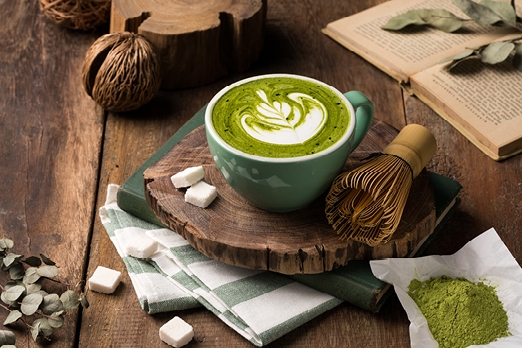 Matcha means powdered tea, but not all powdered teas are matcha! So what is real matcha and, above all, how can we recognize it?