WHO’S TASTING?
This sentence is often used in anticipation of the drop of wine that will determine the fate of the bottle that has been opened in the restaurant. Every wine expert knows best when a wine has a defect, however small, such that it can be rejected.
But when you are not yet a consummate taster, you are afraid of making a mistake, out of incompetence, because you think it is not possible that it is the bottle that is defective, but rather your own palate. If you too are afraid to speak your mind in front of the sullen gaze of a sommelier who has just given you an eloquent list of qualities, virtues and specifications of your bottle, fear not. Read on and we will help you recognise the main flaws a wine may have.
There are many critical moments during winemaking: starting from the vineyard (if we think about the treatments carried out or the choice of harvest time) up to bottling, there can be difficulties. The land may be perfectly suited to the cultivation of a certain grape variety, the grapes the best selected and the winemaker a great expert in the cellar, but still something can go wrong. Fortunately, this does not happen too often, and new technologies have greatly reduced the incidence of defects, but it is important to know how to distinguish them.
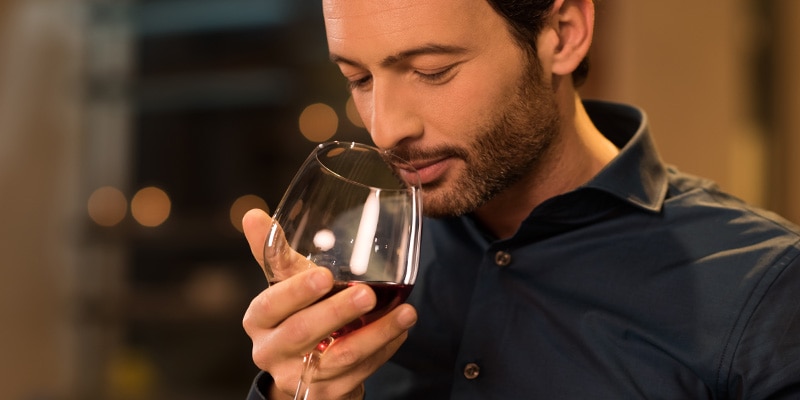
WHEN OXYGEN HURTS: OXIDATION
A process that many natural products undergo, and which is inevitable for all wines, is oxidation. This process is a natural phenomenon that occurs when an organic substance is exposed to the action of oxygen: that breath of fresh air that we love so much could be lethal for our wine. Optimal storage can prevent this process from accelerating too much: sometimes oxidation phenomena are facilitated by exposure to light, especially for white wines bottled in clear glass. Heat is another great enemy of wine when it comes to oxidation: it is important to store it at the right temperature, whether we are talking about ageing barrels or finished bottles.
But since this phenomenon is sometimes necessary to appreciate the olfactory complexity of a wine, how can we recognise when it becomes a defect?
If your glass does not present you with a wine that is vivid and bright in colour, but rather brown and, above all, if the scents that strike your nose are like Marsala wine, of bruised apples, of saba or sometimes of overcooked camomile, then you are certain to have in your hands a wine that has probably been stored badly.
WHAT A RELAXING BATH IN THERMAL WATER, BUT WHAT A STENCH!
That’s right! We’re not crazy, we just want to take you back to an experience you might have had: finding yourself in front of an inviting pool of clear, bubbling water… but then being overwhelmed by a nauseating smell. A smell of rotten egg, garlic or cooked cabbage: the smell of sulphur! The same feeling you might get from a bottle of wine that has not received enough oxygen during vinification. A natural, unaltered colour, but a repellent smell.
It is the mercaptans in particular that cause these smells, the origin of the defect that is usually called reduction. However, the damage is not always irrecoverable: if the wine is of good quality and is left to decant, you will probably be able to enjoy all the original aromatic bouquet.
BRETTANOMYCES, WHO WAS THAT?
We often hear about this wild yeast, which is present in both wines and beers and has been experiencing a certain “rediscovery” in recent years. Its contribution at certain moments in the fermentation process sometimes makes it a faithful ally of producers and, for some particular labels, the aroma it gives to the wine can be appreciated, if below a certain threshold.
If, however, superficial cleaning of the ageing barrels encourages an uncontrolled development of these yeasts, the wine that will be served in your glass will taste like horse sweat, wet cloth, manure or paint. At this point, rest assured, the problem is not you, who have certainly chosen your bottle in the best possible way!
IF THE CORK IS CORKY, THE WINE IS CORKY
The cork must smell like wine, and if it doesn’t, you are probably dealing with a bottle that is unfortunately irrecoverable. When the producer chooses a cork, unfortunately he cannot check that it is not defective, because the unpleasant smell only comes out with the passage of time, with the prolonged contact of chlorine with the cork, and is not perceived in new products.
If you are about to sip a wine that smells like a basement, wet newspaper or mould, then you can certainly become ‘the one who made the big refusal’ (in Italian, quotation from the author Dante “colui che fece il gran rifiuto”), but not out of cowardice! Trichloroanisole, a compound formed in the presence of chlorine, has irreparably ruined the bottle and you have to resign yourself to it, there is nothing you can do. Sometimes it just happens!
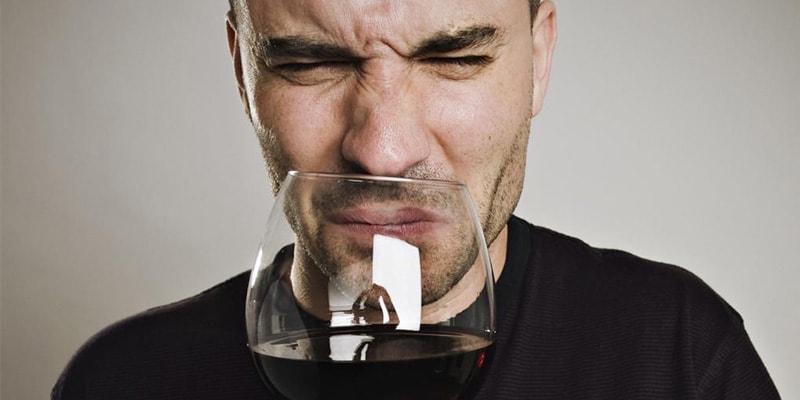
TINTARELLA DI LUNA (ITALIAN SONG, WHOSE TITLE MEANS “MOON TAN”)
If a wine is exposed to direct sunlight or is left under artificial light for a long time, it will acquire what is called a ‘light taste’. The wine’s aroma is damaged due to the loss of freshness and the disappearance of fruity or floral scents. The wines that are most susceptible to this defect are white wines and sparkling wines, which unfortunately often acquire unpleasant aromas similar to cooked cabbage.
A LUCKY TASTER
In your wine-tasting journey, whether for business, pleasure or both, you are bound to find yourself drinking many different products. As we tell you more in our article, tasting is above all about pleasure and passion. The chances of finding a faulty bottle will certainly be few and far between and we wish you the good fortune never to taste an imperfect wine.
If, however, this should happen, from now on, you will not be found unprepared!




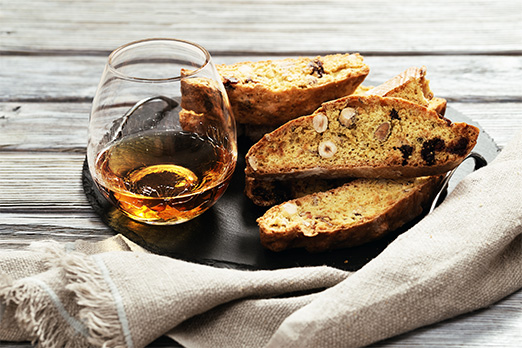 "Appetite comes with eating, thirst goes with drinking" and we want to satisfy both with this article.
 When a wine can give you so much warm, alcoholic and human that remembers you your best friend, you can be sure: it is a Classical Chianti.
 In Milan they were called 'trani': taverns where you could play cards and drink wine. Today they are the places for an aperitif with friends or to enjoy a glass at the end of the evening. Find out with us which are the best wine bars in Milan.