2020 wasn’t an easy year for the wine industry. According to a study conducted by the Vinitaly-Nomisma Wine Monitor Observatory, only one winery in ten saw an increase in its revenue.
This slump was a direct result of the drop registered by Ho.Re.Ca channels (-91%), specialized retail (-75%), exports (-63%), and direct sales in wineries (-87%). In terms of commercial channels, large-scale distribution provided a partial counterbalance with +51%, while online sales have been increasing for 80% of producers.
Regardless, throughout it all, the sector demonstrated its responsiveness and its desire to get past the emergency created by this pandemic. Let’s take a look at what the current trends of 2021 are!
SUSTAINABILITY AND ZERO-IMPACT
Raise your hand if, over the past year, you’ve heard at least one person talk about “sustainability” as it pertains to the wine industry. But when is it that a wine is considered truly sustainable? When its production respects the environment, thus minimizing its impact on the region, and, at the same time, pays attention to the working conditions of its employees and to their social rights, thus guaranteeing financial solidity to the company in its entirety.
More and more consumers are looking for brands that are “committed to” and respect the environment (7 out of 10 clients are ready to reward products from sustainable companies, even paying more for them – source Findomestic).
As a result, wineries that offer organic and biodynamic wines (the production of which uses little or no chemical synthesis) are popping up all over.
QUALITY, LADIES AND GENTLEMEN
Wine Intelligence, a world leader in the research and analysis of wine trends, states that the losses in sales volume are (and will be) increasingly balanced by a higher price point for each individual bottle. Basically, drinking less wine, but better wine!
The entry on the market of as yet unsold stockpiles will also tend to compensate for the increase in prices.
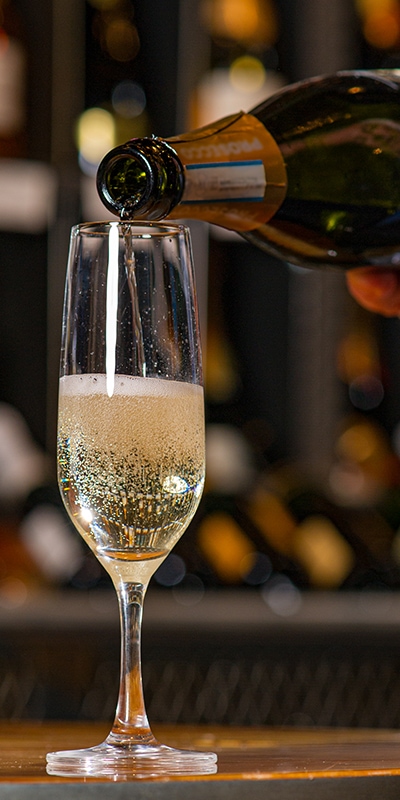
IT’S RAINING PROSECCO
The race was neck and neck for quite some time, but now Prosecco’s transalpine cousin, Champagne, has been left in the dust, leaving Prosecco to become the best-selling wine in the world.
Prosecco has many strong points: a competitive price, it goes down easy, and its quality is on average very high. That’s why it’s unlikely that this Made in Italy product will give way to a runner up. During the thick of the pandemic the official creation of the Prosecco Rosè DOC was announced…
TECHNOLOGY AND E-COMMERCE
The pandemic inevitably accelerated the development of the digital transformation in the wine industry as well. It’s methods of purchase and consumption changed rapidly, as did the ways in which consumers find information.
In Italy in 2020 e-commerce was worth between €150-€200 million. “To get a general idea, just think that in 2009 online sales worldwide represented 1% of all off-trade sales of wine while in 2019 they reached 7%, an absolute value of almost 2 billion bottles,” stated Emanuele Di Faustino, Project Manager for Nomisma. And in 2020, the percentage is expected to have reached 10-12%.
Before the pandemic, Italy was quite far behind the other primary international markets: e-commerce accounted for only 1% of retail sales, as compared to 4% in the USA, 10% in the UK, and a whopping 29% in China. With the lockdown, over 8 million consumers of red wine in Italy placed their trust in various e-commerce services, from those that already existed to those that little by little sprang up during these months. We’re talking about 27% of all wine drinkers, a figure that’s even more remarkable when compared with the 17% from 2018.
THE FUTURE IS PHYGITAL
It’s undeniable that use of the digital medium has increased exponentially over these months, but what will happen when everything goes back to normal?
The future will be “hybrid”, with the key word being phygital: client experiences will be made up of a combination of physical and digital components. Brands will have to work to integrate virtual process in their physical spaces in order to ensure that those who prefer to interact from a distance have a way to do so. An example is to offer sensory experiences through the shipment of products to consumers’ homes.



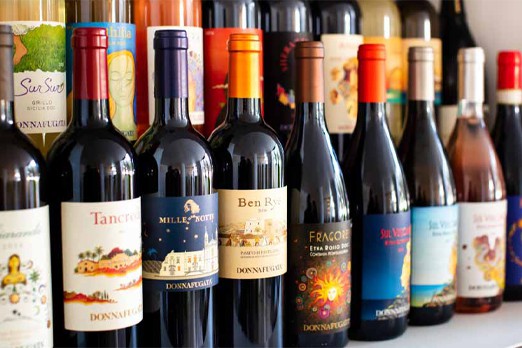 Wine is art and art is to wine as hand in glove, exalting and setting it apart. In today’s post, we are going to tell the story behind four artist labels that have made four wine estates famous around the world. And what other artist designed labels do you know?
 When doing your part is a delight, in the literal sense of the word. Here’s our selection of restaurants and bars in the heart of Milan.
 When a sparkling wine makes you feel so good that you forget that you have no idea what you’re going to do on New Year’s Eve. And New Year’s Eve is tomorrow.