
How a dough comes to life
Let’s learn about the primary leavening agents together, along with the processes that they initiate during their growth in order to turn the mixture of our ingredients into a delicious fresh baked bread!


In our previous article we learned that, while there are many different types and shapes of bread, the basic ingredients are always the same!
Being careful to properly choose and weigh the ingredients and paying attention to how we knead the dough are key steps in how our bread turns out. And yet, our dough wouldn’t turn into the bread we want if it weren’t for other invisible processes that take place during proofing.
Let’s learn about the primary leavening agents together, along with the processes that they initiate during their growth in order to turn the mixture of our ingredients into a delicious fresh baked bread! The much-celebrated stars of a dough’s proper proofing are yeasts and bacteria!
These tiny organisms are responsible for transforming the sugars present in the flour into ethanol and organic acids, like lactic acid, succinic acid, and acetic acid, and carbon dioxide.
YEASTS
Let’s talk about yeasts. These microorganisms are members of the fungus kingdom and in particular the ascomycota phylum. They are able to live both in the presence and absence of oxygen, though they prefer to reproduce when this molecule is present. They are responsible for alcoholic fermentation, thus called because the primary product is ethanol.
The optimal temperature range for their needs is between 26°C and 30°C. However, our little friends are able to survive – albeit not to the fullest of their abilities – in a much broader spectrum of temperatures as well, that ranges from 4°C to 35°C.
Pretty resilient, right?
Their ability to live both with and without oxygen is fundamental, because in dough both conditions exist. During the stage in which the ingredients are being blended together, air bubbles get incorporated and these microorganisms use them to grow. Once this resource is exhausted, the yeasts switch to anaerobic respiration, thus truly beginning the alcoholic fermentation process mentioned earlier. In addition to ethanol, carbon dioxide is also produced, which is responsible for the increase in volume of the dough.
What other factors must we keep in mind in order to nurture these organisms and obtain a good bread?
THE FOUR VARIABLES
Four variables compete to create a good dough and ensure our yeasts’ survival: pH, the presence of salt and fats, the proofing temperature, and the composition of the water that’s used.
Although this may seem like a lot of variables to keep track of, we’re here to give you some simple advice.
A pH of between 3.9 and 5.3 is ideal; a more acidic pH inhibits fermentation, while a more basic pH slows it down. This characteristic is particularly important if you’re using starter yeast. In this case, make sure that you’ve refreshed it enough times to ensure that the flora present in your dough isn’t primarily made up of bacteria (lactic or acetic), the fermentation products of which are primarily organic acids, responsible for lowering the pH of your piece of starter yeast.
Don’t add too much condiment or salt; these two variables – if present in excessive quantities – can block the yeasts’ activities. In our previous article you’ll find the amount that’s usually used; as an alternative, remember to follow the guidelines of the recipe that you’re referring to.
When it comes to temperature, make sure that proofing is taking place between 24°C and 32°C; above this temperature the yeasts begin to show signs of distress and you risk blocking the entire growth and fermentation process.
Finally, the composition and the hardness of the water can interfere with the activities of these microorganism; too much chlorine, copper, or other metal can slow down activity. So if you have doubts about the composition of your tap water, use mineral water, and especially fizzy water – given the greater quantity of gas – if you’re refreshing your starter yeast.
BACTERIA
Now let’s focus on lactic acid bacteria and in particular on the bacteria of the Lactobacillus genus, the primary bacteria present in breads made with starter yeast. These are microorganisms whose growth takes place in symbiosis with yeasts. They feed on sugars (maltose) that are more complex than the yeasts, using some that are produced by the metabolism of the yeasts themselves, and, through their activities, create a pH that’s ideal for the development of these same yeasts. In other words, these two groups have a very close relationship!
In order to make sure that this bond remains strong, there are a few things to be aware of: the obligatory heterofermentative bacteria are those that are favorable to baking. Heterofermentative bacteria are able to produce not just lactic acid, acetic acid, ethanol, and carbon dioxide, but also all of the compounds necessary for creating an airier dough with a characteristic flavor.
For this group of bacteria, ensuring the right temperature is fundamental. Fortunately, like their yeast friends, they prefer to live at a temperature of around 26-27°C. So we can keep things simple and ensure the growth of both in one step. The extra element to keep track of is our dough’s percentage of hydration. In this case, the optimal moisture content is 40-47% of the total weight.
Does your recipe have these proportions?
FERMENTATION
Fermentation begins when the oxygen available in the dough runs out and the microorganisms present in it begin conducting anaerobic respiration.
Two different types of fermentation take place in bread dough: alcoholic fermentation by the yeasts and bacterial or lactic fermentation by the lactic acid bacteria.
In the first case, the yeasts transform simple sugars like glucose and fructose into carbon dioxide and ethanol. In the case of flour, however, these simple sugars account for 2% while the remaining quantity – approximately 70% – is made up of starch, which can’t be directly used by these microorganisms. How do we solve this problem? Here one of steps in flour production is extremely useful: we’re talking about milling.
Milling causes the partial breakage of the granule of starch, making the sugars contained within it available. Nevertheless, an additional step is necessary in order to ensure that these sugars are truly fermentable. Given that these are complex sugars, made up of many little interconnected blocks, they must be separated into their basic components, like glucose and fructose. The transformation of complex sugars into simple sugars takes place thanks to the alpha-amylase enzyme, naturally contained in the flour and that can now finally perform the job for which it was created!
If you notice that it’s tough for the fermentation to get going in your starter yeast or dough, we suggest adding malt extract or flour in an amount that does not exceed 1% of the total weight of the flour (ex. 10 g for 1 Kg of flour). This ingredient is rich in alpha-amylase and can provide a rich banquet for your yeasts!
Meanwhile, lactic fermentation takes place thanks to the lactic acid bacteria present in the starter yeast – when used – or in the flour itself. The primary goal of this kind of fermentation is to lower the pH of the dough, thus allowing the product to be naturally preserved for longer, and giving it both flavor and fragrance.
To ensure that it is well-preserved and doesn’t develop unpleasant acidic notes, the ideal ratio between the lactic and acetic acids should be 3:1. If we’re talking about flavor and fragrance, the formation of the molecules responsible takes place during baking due to the reaction between the previously mentioned organic acids and the ethanol. The intricate balance that comes to life within the dough is so fascinating to us that as we were writing this we set about refreshing our starter yeast, we smelled it to check its aroma, and now we’re ready to start kneading so that we can go back to the office and show off our bread!
You too, right?
BIBLIOGRAPHY
Montanari G, pH 4.1 Scienza ed artigianalità della pasta lievitata, (2015) Chiriotti Editore
Ready to join the Vinhood family?


Vinhood is the First Italian Taste Agency. We explore the world of taste to guide people about how to choose and consume products and supporting companies in nurturing personalized relationships with their customers.
Read more
- Bread that's to die for! The real story of Pancarrè: the bread of Turin's executioner
 On World Picnic Day, we share a dark story that talks of executioners, poets, and Turinese brilliance.
 - Bread and ice cream: the unusual pair that gourmets love
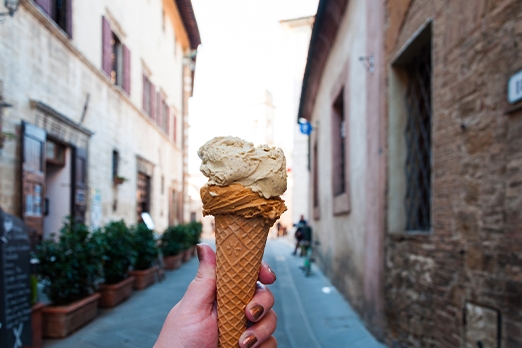 Spoiler alert: we’re not talking about the next evolution of brioche and ice cream, but about an actual flavor, one that’s also part of many regional specialties.