In recent years, coffee and wine are often being compared, especially when referring to third-wave coffee. Coffee’s supply chain is certainly more complex and unequal.
Everyone knows that the division of capital and exposure among the stakeholders throughout the chain is uneven, unlike wine which is much fairer in that sense.
However, if you think of the approach and perception that coffee is receiving in the last 10 years or so, you’d see a lot of similarities to the world wine.
PARALLELS BETWEEN COFFEE AND WINE
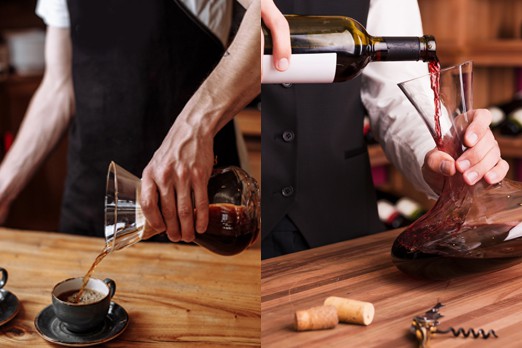
Both wine and coffee are agricultural products. With the help of some manipulations and processes, they turn into some of the most popular beverages around the world.
Moreover, particularly in the specialty niche, coffee professionals tend to get inspired quite a lot by the wine industry: producers’ names are all of a sudden highlighted, methods of processing in the farm (/vineyard/winery) are mentioned, varieties get their importance and terroir is discussed to the smallest detail.
WHAT ABOUT BARISTAS AND SOMMELIERS?
That being said, a comparison between specialty coffee Baristas and wine Sommeliers is not so common, but from how I see it, also in this matter, both worlds resemble.
Up until 10 years ago, being a Barista was mostly a technical matter. Yes, service and attitude were always important, but Barista’s main concern was to brew and serve coffee. Back then, it didn’t make much sense to compare Baristas and Sommeliers.
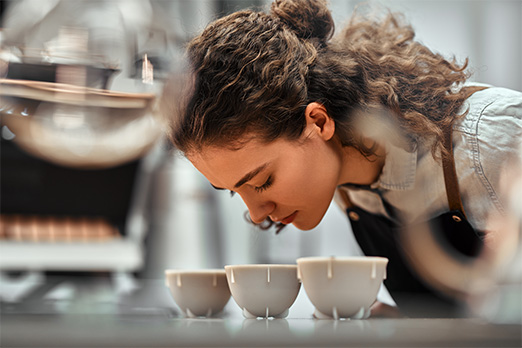
Nowadays though, in an era when specialty Baristas speak about processing methods, coffee varieties, different taste notes, sensorial experience, origin, and terroir, it seems like the gap between them and Sommeliers, who are actually trained to do exactly these things, has never been so narrow.
The differences are quite evident. In general, a Sommelier shouldn’t have any manual skill, apart from opening a bottle (…), unlike Baristas who must professionalize on a wide range of gear and machines – from grinders to espresso machines, filter brewers, and more… Sommeliers, on the other hand, must earn their title through an official course and certifications.
Baristas, in the best scenario, go through a training period provided by their employers or even an external company, but it’s not obligatory to do any type of official course in order to be titled a “specialty coffee Barista”.
SO, ARE THEY SO SIMILAR?
Honestly, while writing these words, I realized that maybe my theory is more of wishful thinking, rather than reality. Because it is true, to some extent, that specialty Baristas do act somehow like Sommeliers.
But in real life, even within specialty coffee shops, it’s like Russian roulette: sometimes Baristas are very proactive, educative, informative, passionate, and knowledgeable, but in many other cases they’re just hipsters with tattoos who’d barely look at you.
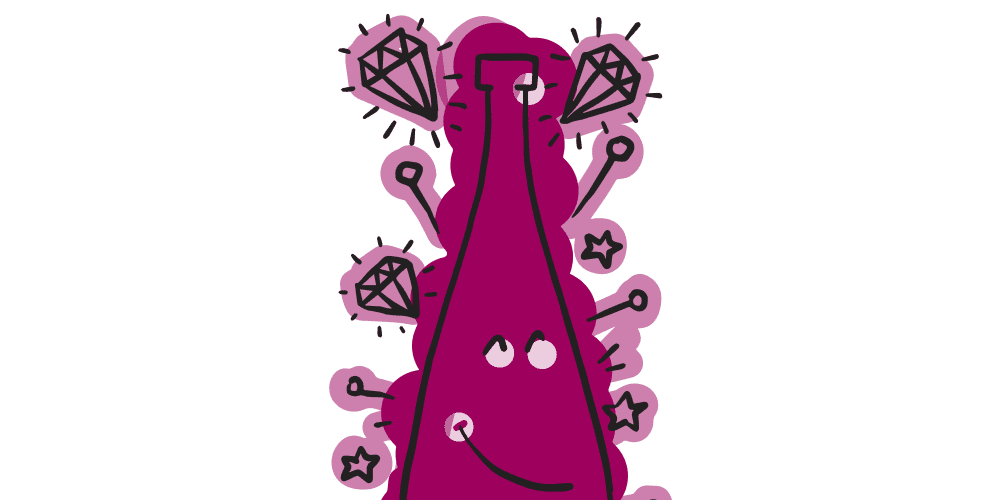
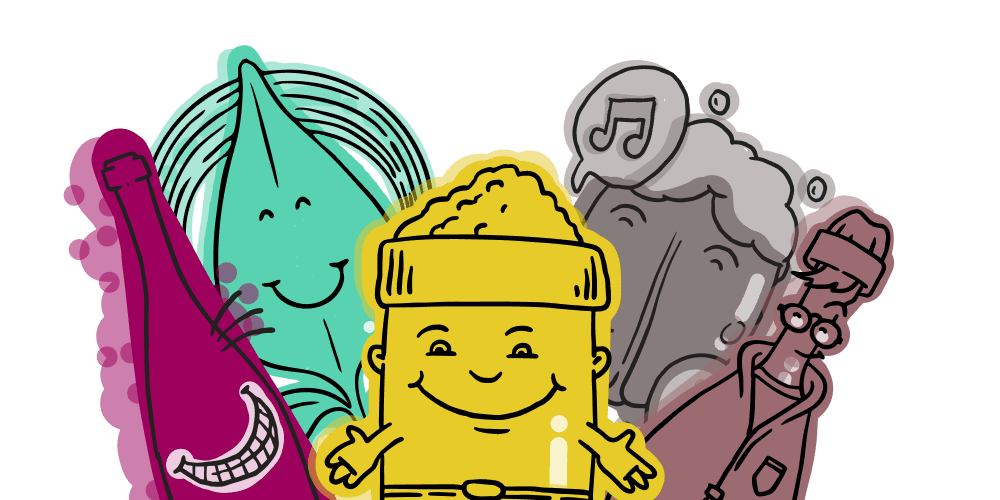
Wouldn’t it be lovely to have your local coffee shop Barista talking to you about the #Characters of the coffee you’re about to drink?
For instance, if you order an African coffee for a filter, and while drinking, the Barista will describe all of its #Adventurous attributes, from fruitiness to sparkling citrus-like acidity, or rather sipping on your Brazilian natural-processed espresso, listening about its #Cheerful characters – deep, sweet, well-balanced, chocolate-like aromas.
BOTTOM LINE
To sum things up, coffee and wine definitely have some similarities. Even Baristas and Sommeliers.
Are they identical? No, they are not.
Should and could they be more alike? In my humble opinion – yes they do.
For sure, some customers just want to grab their quick espresso and continue with their day, without listening to some “poetic” stories about their coffee.
Yet a significant segment of specialty coffee lovers actually craves to hear the background and the stories behind the coffee they are about to drink. That’s the experience they are after, that’s one of the main reasons they would prefer to pay a few extra Euros for their cup of coffee.
If that’s what customers are looking for, and coffee shops are trying to create culture, raise the awareness and have a transparent, sustainable product – having a “coffee Sommelier” is an important step to consider. Both sides would greatly benefit.


 Hey, do you think every donut has a hole? Well, not every coffee has that amazing smell we all love either. So, let's learn about the flaws in coffee and how to spot them when we're drinking it.
 Specialty coffee is by now a well-known term. It is both a specific, precise definition, as well as a notion, movement, more of a fluid concept and philosophy. Let’s take a look at both of these perspectives of specialty coffee.
 Italy is credited for the invention of espresso, the concept of coffee blends, and in general for the spreading of coffee around Europe (grazie, Venezia). Yet, also known for its very dark roasted coffee, not that appreciated by many. Let's find out what's standing behind it.