
Tea culture in Korea
The tea culture in Korea has a long and rich history and has played an important role in daily life since ancient times. Let's discover it together.


China and Japan are globally recognized as the undisputed leaders of tea culture. Thanks to their millennia-long history, the wide variety of teas produced, and their fascinating ceremonial rituals, these two Asian countries attract the interest and curiosity of tea experts, enthusiasts, and newcomers alike. However, few people know that in the Far East, Korea also plays a crucial role in producing premium, high-quality tea.
The tea culture in Korea has a long and rich history and has been an important part of daily life since ancient times.
According to a legend, tea arrived in Korea in the 2nd century AD through a marriage: that of an Indian princess and King Suro. However, there are no concrete sources detailing what the tea brought as a dowry by the princess was like.
Other more recent and reliable accounts suggest that tea was introduced to Korea around the 6th-7th century, thanks to the contact between Buddhist monks and China. The monks, returning home after years of study, brought with them tea and the art of preparing it during state ceremonies or to accompany meditation. In the year 828 AD, during the Tang Dynasty of China, Korean King Heundok was gifted Camellia Sinensis seeds. These were later planted in the Hadong region along the slopes of the Jirisan mountain range.
Religious, commercial, and cultural exchanges between China and Korea became increasingly frequent during the subsequent dynasty. As a result, the Korean tea practice was influenced by the Chinese Song style: tea was ground into a fine powder and whisked to produce a dense foam.

THE TEA OF THE ELITE
In the 14th century, however, there was a setback: Confucianism replaced Buddhism, temples were destroyed, and the tea culture was banned. Some monks returned to civilian life, while others sought refuge in remote mountain temples to secretly continue passing on their traditions, including that of tea.
Furthermore, the Japanese invasion (1592-1597) caused further devastation and upheaval, and tea disappeared from Korean life. Once again, Buddhist monks and a small intellectual elite were the guardians of this ancient culture, hidden like a small secret to protect.
Only with Korea’s independence in 1945 did the patriot, Buddhist monk, and scholar Venerable Hyodang Choi Beom-sul plant new tea plants and teach the practice across the country, introducing Panyaro, a new style of Zen ceremony. Today, the Panyaro Institute continues to teach the Way of Tea through naturalness and simplicity. The tea culture is now shared through academic courses, festivals, and conferences, and a renewed interest is emerging throughout the country.
Despite this new revival, Korean tea remains a niche product, little known in the Western world, and difficult to find outside of the country of origin due to its elite and highly cultured heritage, limited production, and consequently very high prices.
THE CULTIVATION OF TEA
Green teas are named after the harvest period. The best, those harvested before April 20, are called Woojeon, and their tender buds offer sweet and delicate vegetal notes in the cup, a rich umami, and a velvety, almost buttery liquor.
The second harvest, known as Sejak, is made with slightly larger buds and tender leaves selected by hand between April 20 and May 5. Its liquor, green-gold in color, is slightly more intense, with a complex taste reminiscent of dried fruits and delicate citrus notes. Following this, after May 20, comes Jungjak, and lastly, Daejak, the fourth harvest obtained from the more mature and tough leaves of late summer.
The most common technique for producing Korean green teas involves a light steaming process, followed by pan frying in large woks. This is followed by rolling and final drying. This mixed technique makes the teas unique, with a complexity created by the harmonious union of fresh vegetal and nutty notes.
Only Jeoncha is a special green tea similar in appearance and taste to Japanese Sencha, as it is steamed using the same technique, followed by intense rolling that shapes the leaves into the typical needle-like form.
In addition to loose-leaf tea, small amounts of Garu-cha are also produced, a powdered green tea very similar to Japanese matcha.
THE TERROIRS
The three most renowned and famous tea-producing regions for their high-quality teas are Hadong, Boseong, and Jeju Island. Each offers unique botanical varieties and processing techniques that contribute to the diversity of the harvests. Korean tea is predominantly green, but some producers also work with oxidized black teas (Balyo-cha, which are a must-try for their warm chocolate, vanilla, honey, and fruity notes), partially oxidized teas (Hwang-cha, with warm roasted notes), and fermented and pressed teas (with typical smoky and licorice hints).
Hadong is the oldest terroir, and here, as in other cultivated areas in the south of the country, there are still ancient and wild Camellia Sinensis plants. The tea from Hadong is known as the “king’s tea” because it was here that King Heundok ordered the planting of seeds in 828 AD.
Along the mountainsides, high-quality green tea is still produced in the traditional way.
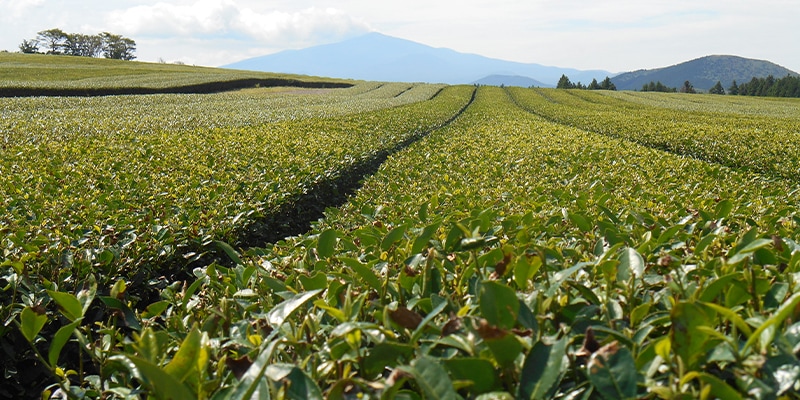
Boseong is the largest cultivation region and is famous for the beauty of its curving gardens that elegantly follow the contours of the hills. If you love green tea, Boseong should be at the top of your list of places to visit in Korea. But even if you don’t, for the charm of the landscape, Boseong should still be at the top of your wish list! I’ve been there three times since 2013, and on each occasion, I took hundreds of photos! The first “wow” moment to capture comes as soon as you reach the base of the plantation and look upward. Then, more follow as you look around.
A good time to plan a visit is during the Boseong Green Tea Festival, with stands displaying and selling tea, guided tours of the plantations, numerous opportunities to participate in traditional ceremonies, or taste green tea-based snacks and ice cream.
Jeju Island, located off the southwest coast, is known for its unique climatic and geographical conditions, ideal for cultivating Camellia Sinensis.
Called the “Island of the Gods” by the local population, it formed about 2 million years ago when a submarine volcano erupted.
In 2007, with its iconic lava tubes, it was recognized as a UNESCO World Heritage Site, becoming a highly sought-after tourist destination for the beauty of its ecosystem. The island is home to over 2,000 plant species, and this complexity contributes to the diverse aromas and flavors of its finest teas.
Many visitors have the opportunity to tour the plantations, participate in tastings, and deepen their knowledge of tea production through educational activities. Tea production has increasingly become a significant part of the island’s tourism appeal.
Opened in 2001 and the first of its kind in Korea, the Osulloc Tea Museum is a true gem. It shares tea culture with over two million visitors annually, and within its beautifully designed Tea House, it offers ceremonies and tea-inspired cuisine for an authentic and immersive experience in Korean tradition.
Are you ready to visit these dream locations that should absolutely be on your bucket list?

Ready to join the Vinhood family?


Vinhood is the First Italian Taste Agency. We explore the world of taste to guide people about how to choose and consume products and supporting companies in nurturing personalized relationships with their customers.
Read more
- The season for chai - Part 1
 It’s the time for sweaters and woolen scarves, and for us tea aficionados this means only one thing: the season for chai has arrived!
 - The accessories for preparing a good cup of tea
 To prepare an exceptional cup of tea, we begin with the teapot. But the first and obvious question is: what kind is best?
 - 10 things to know if you're invited to tea at Buckingham Palace
 If you happen to be invited to the palace for tea, know that there’s a protocol for being in “royal” company without committing any faux pas. As we await our official invitation, let’s take a crash course in proper tea etiquette, just to make sure that we’re ready for any eventuality!